Let’s face it. Sports betting often feels like throwing darts in the dark. You might guess, bet on favorites, or follow a story. It’s emotional, messy, and can empty your wallet fast.
But what if you could see what you’re doing? That’s where Expected Value, or EV, comes in. It’s not fancy finance stuff. It’s simple math that shows if a bet is worth it or not.
Think of EV as your guide. Instead of guessing who will win, you check if the bet price matches the real chance. A +100 bet with a 55% chance is a treasure. But a +300 longshot is likely a waste.
Learning to bet based on math, not feelings, is key. It turns betting into investing. And like any smart investment, it starts with a solid plan—your sports betting bankroll. The goal is to build a strong foundation, not rely on luck. Let’s get good at this.
Positive/Negative Correlation Management
Imagine building a house of cards. You can stack them neatly, but if they lean the same way, a gust of wind can knock them down. This is like leg correlation in a pick’em contest. It can make or break your chances, and most players don’t even know it.
Let’s get tactical. Positive correlation means your picks are all connected. For example, betting on a quarterback’s passing yards and touchdowns is like betting on the same thing happening. If the quarterback has a good game, both bets win. But if the game changes, both bets lose.

Using the quarterback example, a card with bets on passing yards, rushing yards, and touchdowns is a single bet. It’s betting on the quarterback having a good game. If he does, all bets win. But if he doesn’t, all bets lose.
This strategy works when you’re sure of a game script. It’s a high-risk, high-reward bet. But it’s not a diversified portfolio; it’s a single bet.
The magic happens with negative correlation. This is where you hedge without hedging. For example, betting on a team’s running back but against the quarterback. If the team runs a lot, the quarterback won’t throw as much. This is a smart bet because it follows a logical game script.
Understanding this is key to season-long contests. The goal is to manage risk over time, not just in one game. It’s about building a portfolio, not just a card. One wrong move, and you’ll see which one you built.
Optimal Card Size by Edge
There’s a key truth for winning pick’em players: edge matters more than size. The big payout isn’t smart strategy but a dopamine rush that can drain your bankroll. More legs don’t make you smarter; they just lower your chances.
Let’s look at the numbers. Say you have a 55% chance on a pick, which is great. You feel confident and add three more picks. Your chance of winning all three? About 16.6%. Then, the excitement tells you to add more, but your chance drops to around 5%.
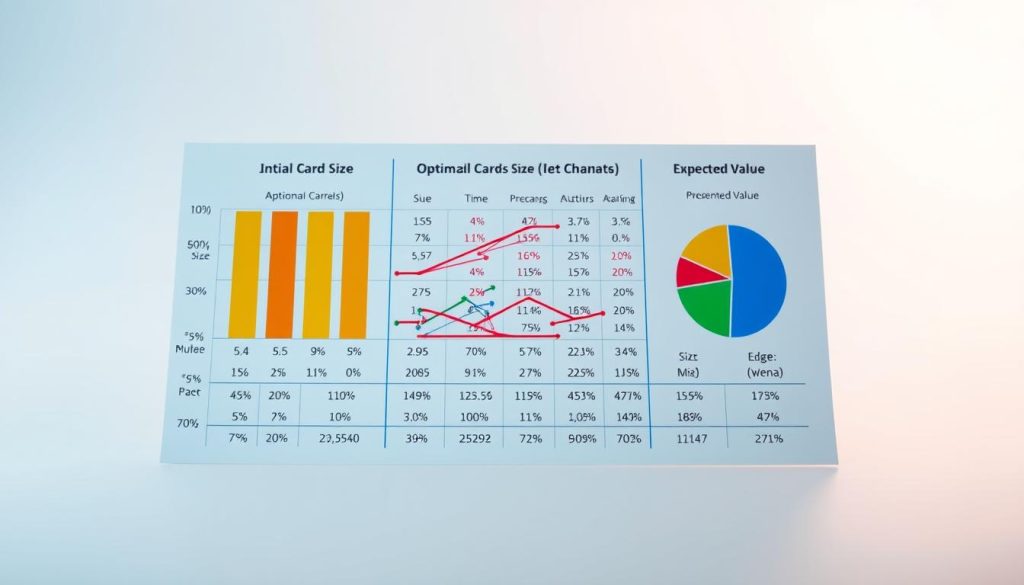
That 5% chance isn’t a smart bet; it’s a hope wrapped in numbers. True odds are unforgiving. Each extra leg increases your risk, not your smarts. Knowing EV is essential. Your expected value comes from solid probabilities, not dreams.
So, what’s the right approach? Your card’s size should match your edge. It’s a simple, strict rule.
- Big edge on one or two spots? Keep it simple. A two or three-pick card is powerful. The EV is strong and focused.
- Small edges on many games? You’re not building a card; you’re buying a lottery ticket. Spreading thin EV across many legs makes it weak.
The dream is the 10-pick card winning big. But the truth is, it rarely does. The best spot is between being bold and being smart. It’s about how much real advantage you have and how to use it to win.
Think of it like a financial portfolio. You wouldn’t risk everything on 10 risky startups. You’d mix a few strong bets with safer ones. Your pick’em card is like your investment for the week. Use your conviction’s strength, not just the payout’s appeal.
This rule is key to a winning NFL pick’em pool strategy. It teaches discipline. It stops the idea that “this next pick will be the lucky one.” Your edge is your guide. When it’s strong, be bold but focused. When it’s weak, be humble or ready to lose.
Finding this balance is what separates playing the pool from being played by it. The math doesn’t care about your gut or TV “locks.” It only looks at probabilities. Listen to the math, not the crowd. Size your card right, and watch your EV and bankroll grow steadily, not wildly.
Fade the Public vs. Follow the Steam
The sports betting market is like a huge, noisy bazaar. On one side, you have the “public” who bet with their hearts. On the other, the “sharps” who bet big and move the market. Your pick’em strategy is about reading the room, not just picking winners.
Fading the public is a classic move. It’s simple: if most bets are on one side, the other side must win for the sportsbooks to make money. They adjust the line to attract bets on the less popular side, often creating value.
When you see a line move *against* a lot of public betting, that’s a fade the public signal. The public loves favorites and big-name stars. Betting against them is often the right move.
Then, there’s the “steam.” This is the sharp money that moves the line, often against the public. Following steam is like catching a wave. A big line move in a short time is steam. But, it’s all about context. Is it a single sharp bet or a real market correction?
This isn’t a simple choice. The best pick’em strategy blends these signals. The table below shows the main differences.
| Strategy | Core Logic | Best For | Risk Level |
|---|---|---|---|
| Fade the Public | Betting against the heavily-backed side. The theory is that the public is often wrong, even on big games. | High-profile, prime-time games with a clear public underdog. The public loves betting on the Chiefs or the Cowboys, for example. | Medium-High. The public is right sometimes, like when they’re on the side of a clearly superior team. |
| Follow the Steam | Betting with the line movement, assuming the “smart money” knows something the public doesn’t. | Early games, off-shore line movement, or when a key injury or weather report hits the market. | Medium. You risk following “fake steam” or being the last one in before the line corrects. |
| Contrarian Blend | Fading the public, but only when the steam confirms the move (or vice-versa). This is the “sweet spot” for value. | Your core pick’em strategy for consistent edges. It’s about finding where the public is wrong AND the sharps agree. | Medium-Low. This balanced approach reduces variance by combining signals. |
| Market Sentiment Analysis | Using tools to see the percentage of bets vs. money wagered. A game with 90% of bets on one side, but only 60% of the money, suggests sharp money is on the other side. | Every pick’em contest where you can gauge public betting splits. It’s a core part of a basic strategy for reading the market. | Low. This is pure information-gathering, the least risky move. |
Is the public always wrong? No, they win big on obvious mismatches. And steam? It can be sharp or a “trap” set by books. Treat these signals as data, not absolute truth. The goal is to find value, not follow blindly.
Mastering this isn’t just about picking winners. It’s about understanding the market’s psychology and economics. For more on building a foundational strategy, understanding market mechanics is as important as knowing the games.
Bankroll Rules for Cards
Your bankroll is more than money; it’s your strategy. How you spread it across different cards shows if you’re smart or just taking risks. This is where your careful planning meets reality.
Experts say to bet 1-5% of your bankroll per play. That’s good for single bets. But for cards with many legs, you need to adjust.
Imagine betting 5% on a five-leg parlay. It’s like using a cannon to catch squirrels. The blast might impress, but it could also ruin your chances.
How much you bet should match your card’s design. A three-leg card with solid chances might get a 2% bet. Each leg is a separate chance. The leg correlation is low, so your EV is more likely to happen.
But a five-leg card with all bets needing the same result is different. Here, a 0.5% bet might be bold.
The closer the leg correlation, the smaller your bet should be. This is because correlation means more risk. Five legs that need the same thing to win are not five chances. They’re one big risk.
Betting big on a card with tight correlation is bold. It shows you’re either very sure or very desperate. Usually, it’s the latter.
Here’s a guide for your next card:
- Low Correlation (Independent Legs): 1-3% of bankroll
- Medium Correlation (Some Game Script Overlap): 0.5-1.5% of bankroll
- High Correlation (All Legs Need Same Scenario): 0.25-0.75% of bankroll
This isn’t about being cautious. It’s about keeping your money for the long run. The market offers many chances. Your goal is to last long enough to take advantage of them.
Your bankroll strategy tests your confidence. If you really believe in your EV calculations and card design, you’ll bet wisely. If you’re just hoping, you’ll bet too much.
One big win doesn’t make a strategy. It’s the steady, managed growth that does. Your bankroll rules should be as strict as your pick choices. Anything less is just gambling in disguise.
Worked Examples
Let’s build two cards live. Theory meets the ticket.
Card A: The Sage’s Special. It has two NFL totals with a strong, independent EV foundation. We calculate each leg’s implied probability. The combined EV is positive and mathematically sound.
We allocate a disciplined 1.5% of our bankroll. This isn’t a prayer; it’s a plan.
Card B: The Fan’s Folly. It has three correlated player props from a single prime-time game. Like stacking Jarrett Stidham completions, yards, and a touchdown. We toss in the popular favorite because the crowd roars.
We chase the lottery payout with a reckless 5% bet. Emotion dictates the slip.
Now we dissect. Card A’s calculated EV suggests steady growth. Card B’s emotional build creates a volatility bomb. The public favorite often carries negative EV, poisoning the whole parlay.
The math doesn’t lie. One approach respects the EV. The other ignores it for a story. Your long-term ledger will reflect which card you consistently print.
The card slip is your final exam. Will you submit the Sage’s work or the Fan’s folly? The answer is in the expected value.