You see a guaranteed $50,000 prize pool, shell out your $100 entry fee, and immediately start blasting multi-leg parlays to climb the leaderboard. However, by Tuesday night, you are mathematically dead in the water. Here is the cold truth: you didn’t lose because of bad luck. You lost because you walked into a mathematical meat grinder without checking the house rules.
Corporate sportsbooks design public tournaments to force high-frequency, high-vig wagers from uneducated players. They want you distracted by the shiny prize pool while they quietly drain your stack through hidden fees and rigged structures. To win, you must treat a tournament not as a sports picking contest, but as a ruthless equity game against a mathematically compromised field.
Let’s look at the typical seven-day timeline of a casual bettor who ignores the fundamental rules of competitive sports betting. On Monday, you draft a solid, disciplined card of straight bets and feel like a genius. By Tuesday, a bad beat drops you down to 400th place on the leaderboard, and absolute panic sets in.
On Wednesday, you force an ugly MACtion parlay just to catch up to the leaders who somehow hit a ridiculous underdog moneyline. Thursday brings pure emotional tilt. Consequently, by Friday night, your tournament entry is a smoking crater of regret because you let the bookmaker dictate your behavior.
You chased arbitrary leaderboard prize pools instead of hunting for positive expected value (EV). Professional bettors do not play these games based on emotion, excitement, or a desperate need to see their username on a digital screen. Instead, they strip the tournament down to its studs, run the numbers, and refuse to deposit a single cent unless they hold a distinct mathematical advantage over the house.
Here is the exact six-point checklist sharp players use to evaluate, attack, and absolutely dominate a sports betting tournament.

Rule 1: Audit the Rake—Is the House Skinning You Before Kickoff?
Before you even look at the sports schedule, calculate the true entry fee deduction. Casual players see a $100 entry fee and assume their entire $100 is going directly into the prize pool to fund the winner. Corporate sportsbooks rely heavily on this widespread public ignorance.
You must read the fine print to find the rake. If a tournament charges $100 to enter but only allocates $80 per player to the prize pool, the book is skimming 20% right off the top to cover their so-called administrative costs. You are stepping up to the starting line with a massive, almost insurmountable handicap.
Think about standard betting markets for a second. Traditional sports betting takes roughly 4.5% of your dough on a standard -110 straight bet. Why would you ever accept a 20% baseline disadvantage just to participate in a gamified leaderboard where you still have to beat thousands of other players? You wouldn’t, and professionals definitely do not.
Pros never play in pools where the house cut eclipses standard market juice. They run strict sportsbook hold calculations to figure out exactly how much theoretical money the operator is siphoning from the field before a single whistle blows. If the math shows a predatory rake, you walk away immediately and keep your capital safe.
So, what’s the bottom line here? Do the math yourself instead of trusting the marketing graphics. Multiply the total number of capped entrants by the entry fee, then compare that massive number to the advertised payout pool. If the gap is wide enough to drive a truck through, keep your money in your pocket and wait for a fairer game.
Rule 2: Hunt for the Overlay—Look for Dead Money in the Field
If you want to know how do sports betting tournaments work for the sharp player, it all comes down to finding dead money. An overlay happens when a sportsbook completely miscalculates the market and guarantees a massive prize pool that fails to attract enough entry fees to cover the payout.
Imagine a book guarantees a $100,000 prize pool for a weekend NFL contest. They charge $1,000 per entry and cap the field at 100 players to make it look exclusive. If only 70 people sign up by the deadline, the book only collects $70,000 in entry cash. They are still contractually obligated to pay out the full $100,000 to the winners.
That missing $30,000 is the overlay. It is pure, unsubsidized dead money injected directly into the pool by the sportsbook’s marketing department to save face. Finding a massive sports betting overlay instantly shifts the mathematical expectation in your favor before a single game kicks off, effectively letting you buy a dollar bill for seventy cents.
Track tournament registration rates meticulously in the final hours before the entry lock. Many sharp players refuse to enter a contest until the absolute last minute, sitting in front of their screens refreshing the participant count to snipe the best possible overlay ratios just before the window slams shut on a Sunday morning. You can literally sit there and watch the clock tick down while counting how much free money the sportsbook is forced to dump into the pot just to honor their own promotional guarantees.
This is the ultimate sportsbook tournament strategy. You force the greedy bookmakers to subsidize your potential winnings by exploiting their mismanaged promotions. Stop paying the absurd rake, and start making the house pay you to play their games.
Rule 3: Map the Payout Structure—Beware the Top-Heavy Trap
Not all prize pools are created equal. You must analyze the equity distribution across the leaderboard to dictate your specific risk profile. Contrast a flat payout structure against a hyper-aggressive, top-heavy structure.
A flat structure might pay the top 20% of the field a respectable return on their entry fee. A top-heavy structure might funnel 60% of the total cash exclusively to the first-place winner, leaving absolute scraps for everyone else. Your payout variance strictly dictates your betting behavior.
| Structure Type | The “Square” Player Reaction | The “Sharp” Player Strategy |
| Winner-Take-All | Plays chalky, popular favorites like everyone else | Builds high-variance, contrarian tickets to separate from the herd |
| Flat Payouts | Swings wildly for massive parlays to secure first place | Grinds out slow, steady singles and doubles to survive the cutline |
If you enter a winner-take-all tournament and draft the exact same heavy favorites as 80% of the field, you are drawing dead. You have to beat the mathematical distribution of prize pools by taking calculated, unpopular stands that give you unique leverage when the public inevitably crashes and burns.
Master this pool equity math. If the tournament pays out flat, mitigate your risk and survive. If the tournament only pays the top three spots, you must embrace massive variance and swing for the fences with contrarian underdog picks.
Rule 4: Decouple Your Volume—Don’t Let the Leaderboard Force Bad Bets
Tournament structures are explicitly engineered to induce sheer panic. The bookmakers want you chasing volume on high-juice, low-probability live betting lines just to accumulate arbitrary points. This is the ultimate trap for the undisciplined player who lacks emotional control.
You check the app on a Sunday night and realize you are sitting in 12th place. The 11th place spot pays out an extra $500, but the only game left on the board is a terrible primetime football matchup with perfectly efficient, unbeatable lines.
The casual player forces a ridiculous prop bet on a backup tight end just to generate enough volume to jump one spot, loses the bet, burns their stack, and drops out of the money entirely. The behavioral psychology of loss aversion proves that humans will make wildly irrational financial decisions when they feel a perceived reward slipping away and panic takes over the steering wheel.
Professional bettors decouple their betting volume from the leaderboard pressure. You log into your account on a random Thursday afternoon after a bad beat and immediately start convincing yourself that a four-leg same game parlay on a meaningless preseason basketball game is exactly what you need to catapult yourself back into the top tier of the leaderboard before the weekend slate even begins. Stop doing this immediately.
The pro rule is absolute. If a wager does not make mathematical sense for your main bankroll, it is lethal for your sports betting tournament profile. Never let a gamified ranking system bully you into making a negative expected value bet just to chase a digital trophy.
Rule 5: Calculate Field-Size Inflation and Tail Risks
Your win probability changes violently based on the number of competitors in the field. Entering a 50-person capped local contest requires an entirely different risk mitigation profile than entering a 50,000-person national free-for-all on a major commercial betting app.
When you play against 50 people, you can win by simply making solid, fundamental, positive EV wagers. The small field size means the variance is contained and predictable. You just need to be slightly sharper than the average guy in the room who is betting with his heart instead of his head.
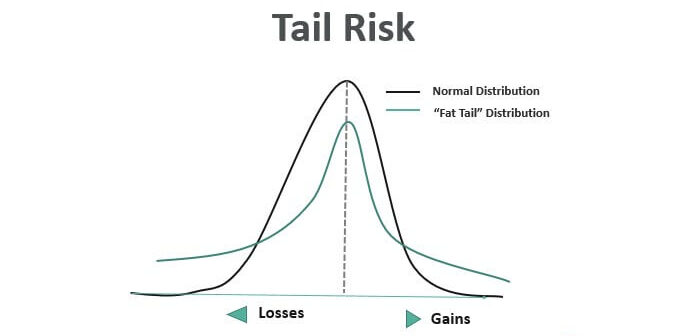
When you play against 50,000 people, fundamental betting goes right out the window. You are no longer just fighting the bookmaker; you are fighting “tail risk.” In a massive field, somebody is going to hit a mathematically absurd 12-leg parlay simply through sheer, dumb luck and bump you out of the money.
You also have to worry about the multi-entry sharks polluting the waters. These are well-funded syndicates that buy 150 maximum entries in a single tournament to cover nearly every possible game script permutation across the board. You, sitting there with your single $20 entry, are drawing completely dead against their massive spread of tickets.
Always target capped-entry tournaments where you can clearly define your opponents and calculate your exact mathematical odds of cashing. If you decide to enter a massive national pool, understand that you are buying a glorified lottery ticket, not executing a sustainable strategy for competitive sports betting.
Rule 6: Secure Your Account Sovereignty—Audit the Anti-Sharp Clauses
Here is the ultimate bookmaker hypocrisy staring you right in the face. Corporate sportsbooks run massive, heavily marketed tournaments to draw in cash, but they reserve the legal right to limit, restrict, or outright disqualify users who actually show a pulse and use sharp tactics.
Read the Terms of Service. Pros check the fine print to ensure their winning profiles won’t be arbitrarily frozen at the payout window. Many casual bettors hit an amazing streak, win a tournament, and go to withdraw their loot, only to get a nasty email from risk management holding their funds hostage.
The book will claim you violated clause 4.2.B by “syndicate betting” simply because you line-shopped an NFL total or bet a heavily favored arbitrage spot that their own traders messed up. Your funds are frozen, your account is limited to $1.15 maximum wagers, and the house keeps the prize money without any regulatory oversight.
Hunt for these anti-sharp clauses before you deposit a single dime. Look for rules restricting specific betting markets, banning odds-screen software, or capping your closing line value. If a sportsbook has a reputation for banning winners, their tournaments are toxic traps designed exclusively to farm losing players.
You need to find the best competitive betting platforms that actually welcome sharp action and transparent grading without threatening to ban you for being smart. Stop handing your hard-earned money to corporate operators who change the rules the second you start winning and find a platform that actually respects your skill level.
Conclusion & Next Steps
You now have the exact blueprint to stop burning your entry fees. Stop treating tournaments like a weekend lottery ticket and start treating them like a calculated equity extraction exercise. Audit the rake, hunt the dead money, map the payout variance, protect your volume, calculate your field size, and secure your account sovereignty.
Take this checklist and review the last three tournaments you entered blindly. You will quickly realize you were playing against a stacked deck and letting the bookmaker steal your edge. It is time to evolve past the predatory corporate bookmakers and take control of your own action.
If you want to test your actual sports betting skills without worrying about rigged terms of service or artificial limits, you need to step into a completely transparent arena. Come sign up for betting challenges with us and prove your ROI to the world. Join our verified peer-to-peer community at bettingchallengers.advision-dev.com/, where the math is clear, the playing field is level, and the sharpest bettors actually get paid for their talent.
Frequently Asked Questions
Are guaranteed prize pools always a good deal for the bettor? Absolutely not, because high entry rakes and massive field sizes often destroy your baseline equity before the tournament even begins.
What is the best way to find a tournament overlay? Track the registration numbers in the final few hours before the contest locks to see if the collected entry fees fall severely short of the guaranteed payout.
Should I change my betting strategy if the tournament payout is top-heavy? Yes, you must embrace higher variance and select contrarian picks to separate yourself from the massive pack of players betting the obvious favorites.
Why do sportsbooks limit my account if I win a public leaderboard? Corporate books label any bettor who consistently beats the closing line or exploits structural tournament flaws as “sharp” and will restrict their action to protect house margins.
How do I track my real ROI in competitive betting? You must log every single wager, calculate your closing line value, and filter out the short-term variance to find your true expected value across hundreds of tournament entries.