Forget the pre-game show. The real action starts when the whistle blows. This is where spreadsheets meet adrenaline, and your edge shifts from who to bet to when to strike.
Welcome to the high-frequency trading desk of sports entertainment. Odds aren’t static here; they’re a living, breathing entity repricing with every completed pass, missed free throw, or coaching blunder.
Your opponent isn’t just the house. It’s the panicked public overreacting to a turnover and the sharp bettors lying in wait for that exact moment. Success demands the calm of a chess master and the reflexes of a day trader.
We’re dissecting how to spot market hysteria, when to pivot your position, and why halftime is for strategy, not snacks. It’s game theory in the red zone. To master this arena, familiarizing yourself with the core sports betting challenge glossary is a key first step.
Let’s break down the real-time calculus that separates the spectators from the contenders.
Identifying Live Edges (Pace, Injuries, Weather)
Finding a live edge isn’t about predicting the future. It’s about understanding the present. You’re not a fortune teller. You’re a detective for the game’s odds.
The score is just the beginning. The real value lies in understanding why the score is what it is.
This is the heart of sharp live betting. It’s about finding the real signals in the game. An early 10-0 deficit for a top NFL team? That’s often a market panic, not a sign of defeat. A star player’s third foul before halftime? That’s a big change the algorithm might miss.
We focus on three main areas of live intelligence. Mastering these makes you more than just a fan.

| Live Edge | What to Watch For | Common Market Misreaction |
|---|---|---|
| Pace & Momentum | Possession tempo, time of possession, shot clock usage, defensive pressure. Is this a track meet or a slow game? | Overreacting to an early score. Missing a strategic slowdown or speed-up. |
| In-Game Injuries | Player exits, limps, medical timeouts. The backup’s warm-up and past performance. | Under-pricing a role player’s absence or overhyping a flashy backup. |
| Weather & Conditions | Wind speed/direction, precipitation, field/court conditions (wet ball, soggy turf). | Not adjusting totals or play-style props enough as conditions worsen. |
Pace: The Game’s Hidden Rhythm
Is the game fast or slow? This isn’t poetry. It’s math. A college basketball game planned as a defensive grind suddenly sees both teams sprinting. The pre-game total looks silly now.
This is where you bet on momentum shifts. A team down 14 points comes out of a timeout with frantic full-court pressure. The live over/under hasn’t caught up to the new, desperate tempo. Recognizing this shift is pure edge. It’s the “Observe” step in action.
Injuries: The Universe Recalibrates
A star goes down. The broadcast shows the replay. You? You’re checking the backup’s stats per 36 minutes. This is player-specific trigger hunting.
In the NBA, foul trouble is a silent injury. A dominant big man with two quick fouls is a ghost in the paint. The other team’s drive propensity—and the live line—should shift instantly. It’s not just who leaves the game, but how the remaining pieces fit.
Weather: The Great Nerf/Buff
That gathering storm isn’t just drama. It’s a direct nerf to passing games and a buff to ground-and-pound. A 15 MPH crosswind turns an NFL quarterback into a hopeful guesser.
Smart live betting here means anticipating the play-calling shift before the oddsmaker does. The total might drop, but the running back prop? That’s your value window. The game plan just got rewritten by the clouds.
Putting this systematic observation together is what separates a hunch from a calculated move. For a deeper dive into building this skill set, our comprehensive live betting strategy guide breaks down the process from watchlist to wagering slip. Remember, the edge isn’t in the highlight. It’s in the context.
Hedging or Doubling Down Mid-Contest
Halftime pivots are like financial tools in sports betting. They help manage the risk of your first bet. You bet on the favorite before the game. Now, they’re down by two touchdowns and look disorganized.
The live market offers more than just sympathy. It gives you choices.
This is the main decision. Do you make a compromise or take a bold step?
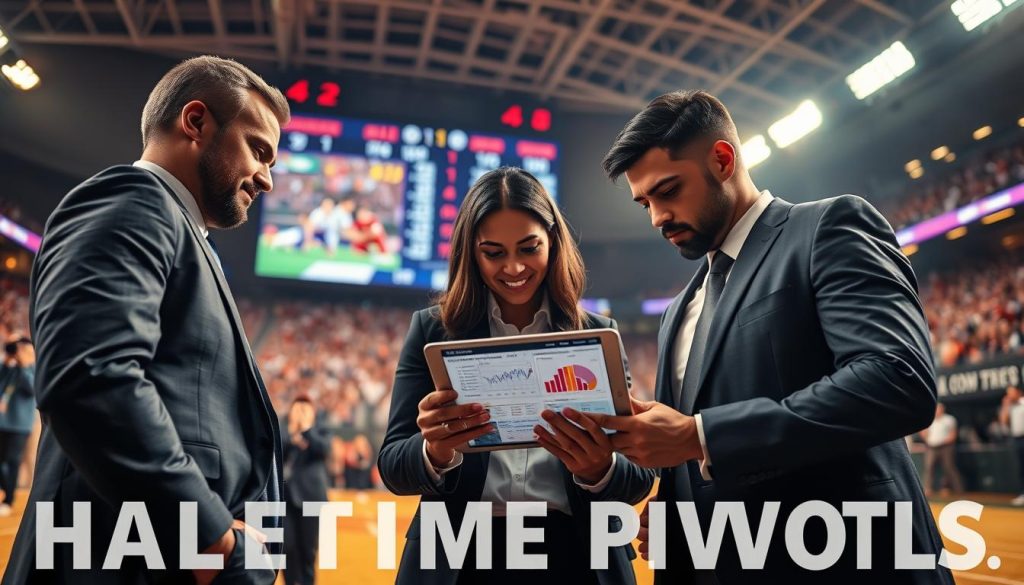
Hedging is like making a deal. You bet on the other side to secure a smaller profit or limit a loss. It’s like buying insurance against your bet being wrong. You give up big wins for safety.
Doubling down is a bold move. It means the market has overreacted. You think the live odds are better than your first bet. It’s not just chasing; it’s believing the odds don’t match reality.
Choosing between these options must be based on math. It’s all about Expected Value (EV). Check if the live odds offer a better deal than your original bet. If yes, double down. If not, you’re just chasing.
Before making a move, remember to shop for the best odds. The best price might be just a click away.
| Aspect | Hedging | Doubling Down |
|---|---|---|
| Primary Goal | Risk Mitigation & Capital Preservation | Capitalizing on Perceived Market Error |
| Strategic Mindset | Defensive. Accepts a reduced gain to avoid a loss. | Offensive. Seeks to amplify gain based on strong conviction. |
| When to Consider | Original bet is in danger; you want to lock in a profit or cut losses. | Live odds have shifted to create a better value proposition than the pre-game bet. |
| Risk Profile | Lowers overall risk and volatility. | Concentrates risk on a single outcome; increases possible volatility. |
| Ideal Outcome | A guaranteed, smaller profit regardless of the final result. | A much larger profit if your original (and reinforced) analysis proves correct. |
So, how do you decide? Ask two questions. First, what’s your goal now? Is it securing a win or maximizing profit? Second, what do the numbers say? If the math shows value, double down. If not, hedge.
Mastering halftime pivots turns you into a live portfolio manager. You’re not just watching the game; you’re adjusting your bet in real-time. Sometimes, the smartest move is to retreat. Other times, it’s to reinforce your bet. The data, not your gut, should guide you.
Halftime Confidence Re-Allocation (if allowed) and Risk Controls and Examples
Halftime isn’t just for Gatorade and pep talks. It’s your chance for a strategic shift. The first half’s emotions fade, leaving you with clear data. This is when you make real halftime changes.
Did the favorite seem off, or were they just unlucky? Your pre-game thoughts are set aside. You now base your confidence on what you saw, not what you hoped for.
Strategy is nothing without discipline. Your risk controls are key. Set a clear budget for the day. Use smart unit sizing, risking only a small part of your bankroll on each play. And remember, never chase a bad bet.
Let’s see it in action. If your futures bet looks shaky after the first half, a small hedge can secure value. If a team known for third-quarter surges is down, a double-down might be wise. These moves work in any contest, including head-to-head betting.
Winning long-term isn’t about winning every bet. It’s about managing losses and seizing market moments. The pros adjust and act. Now you know their strategy.