In the world of competitive gaming and betting, knowing the difference between leaderboard types is key. Each type has its own benefits, fitting different player needs. Real-time leaderboards make players feel urgent and get feedback fast. They boost competition and reward the best quickly, keeping the game exciting.
Seasonal challenges last for weeks or months. They focus on progress and finishing, encouraging everyone to play. They reward players for their hard work over time, building a sense of community.
A good gamification platform sees these two types as friends, not foes. Each appeals to different parts of the player, changing how they play and stay engaged. Knowing these differences helps designers make better games that meet their audience’s needs.
Key Differences & Advantages
Knowing the differences between weekly vs. season leaderboards can boost your competitive edge. These formats meet different player needs and experiences.
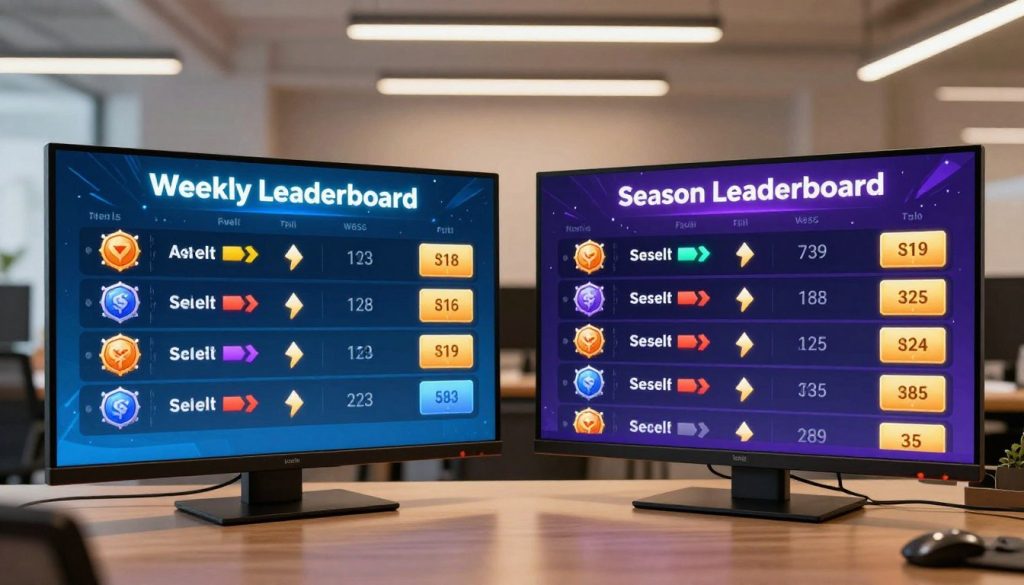
Weekly leaderboards give real-time updates, keeping players hooked. They reset often, letting players climb the ranks and get instant praise. This format is great for excitement and keeping players engaged.
Players can join at any time, feeling no pressure. Each week is a new chance to start fresh.
Season-long leaderboards reward effort over time. They focus on progress and completion, giving a lasting sense of achievement. Players aim for goals that seem reachable, thanks to time for planning and commitment.
This format builds strong community bonds. Players share their progress and celebrate milestones together.
The psychology behind these formats is key. Real-time leaderboards spark competition with instant feedback. Players see their rankings and feel the need to do better. This makes them more active and accountable.
Seasonal challenges, on the other hand, focus on participation over comparison. They give everyone a chance to succeed, focusing on personal growth. This approach reduces pressure and makes the experience more enjoyable for all.
In short, both formats have their strengths. Weekly leaderboards are ideal for short contests, bringing excitement and participation. Season-long leaderboards offer a deeper story and stronger player connections. Understanding these differences helps operators create experiences that match their audience’s needs.
Strategic Play: Short-term vs. Long-term
Strategies in betting change a lot between short-term and long-term contests. Knowing these differences is key for players wanting to do well on the leaderboard.
In short-term betting contests, players often go for bold strategies. These weekly formats need quick decisions and grabbing immediate chances. The contests reward bold moves because the stakes are high and time is short.
On the other hand, long-term contests, like seasonal challenges, need a different approach. Here, discipline and consistency are essential. Players must manage their money well and handle temporary losses. The goal is to build points steadily over time, not rush to the top.
Different types of betting leaderboards also shape strategies. For example, daily fantasy sports weekly leaderboards encourage trying new lineups. Season-long prediction markets, though, reward patience and deep research. Players need to adjust their plans based on the contest type.
Also, the rules and scoring systems of contests are very important. Contest creators can make contests exciting by keeping them dynamic but not chaotic. Long-term contests should keep players interested to avoid boredom.
Understanding the strategic sides of betting leaderboards can help players make better choices. By matching their strategies to the contest type, players can improve their chances. For more on betting strategies, see this guide on sports betting challenges.

Community Engagement
Community dynamics change a lot between weekly vs. season leaderboards. Each type creates a special environment. This environment shapes how people interact and engage with each other.
Weekly leaderboards make things lively, with constant buzz and discussion. People share their rankings, which adds excitement. This keeps users motivated and active.
Weekly leaderboards are great for immediate motivation. Seeing ranks change keeps users focused. It shows the impact of their actions right away.
But, there are downsides. New or lower-ranked users might feel left out. The intense competition can make casual players feel tired.
Seasonal challenges, on the other hand, are more welcoming. Everyone can join, no matter their rank. This builds a sense of community.
Season-long leaderboards focus on consistency, not just winning. This reduces anxiety. But, long timelines can make things less exciting. Celebrating milestones helps keep things interesting.
Different betting leaderboard types create different community cultures. Weekly contests lead to fast-paced communities with lots of messages. Seasonal contests build deeper relationships over time.
Both formats have their challenges. Weekly leaderboards can split attention, hurting long-term relationships. Seasonal formats might lose interest mid-season. But, things like community spotlights and milestone celebrations can keep everyone connected.
When Each Type Works Best
Knowing when to use short versus long betting contests is key to success. The choice between weekly vs. season leaderboards affects user engagement and satisfaction. Think about these questions to make the right choice:
- Is our audience competitive or collaborative?
- Do we need short-term activation or long-term engagement?
- Are users at similar skill or participation levels?
- What behavior are we trying to reinforce?
For quick engagement, real-time leaderboards are best. They’re great for product launches or special events. They create excitement and encourage immediate action.
For keeping users engaged over time, seasonal challenges are better. They reward ongoing commitment and build habits. Casual players or those with less time prefer this, valuing consistency over intensity.
For audiences with mixed interests, a mix of formats works well. This way, brands can appeal to both competitive and casual players.
But, there are common mistakes to avoid:
- Using permanent leaderboards that discourage new participants.
- Running overly long challenges without clear milestones.
- Measuring only participation, not behavior change.
- Ignoring audience feedback on leaderboard formats.
To better understand these points, look at the table below:
| Scenario | Recommended Format | Key Benefits |
|---|---|---|
| Product Launch | Weekly Leaderboard | Creates urgency, boosts initial engagement |
| Loyalty Program | Seasonal Challenge | Rewards long-term commitment, builds habits |
| Major Events (e.g., playoffs) | Hybrid Approach | Engages diverse audience segments effectively |
By matching your leaderboard type with your goals and audience, you can boost engagement. Knowing when to use short vs long contests leads to better strategies and results.
Mixing Formats for Maximum Fun
Creating a fun competitive environment means mixing different formats. Top gamification programs use both weekly and season-long leaderboards. This mix makes players happy and keeps them coming back.
Seasonal challenges can have mini-leaderboards that reset every week. This mix of short and long contests keeps players excited. They can win now and aim for bigger goals later.
Innovative platforms offer unique experiences. Players can win weekly rewards and points for seasonal goals. This way, both instant and long-term goals are met.
Real examples show that mixing formats boosts player numbers and keeps them playing. It’s important to show progress clearly. Rewards should match the effort in both short and long contests.
The future of competition is in combining different leaderboard types. This thoughtful mix meets different player needs, making the game better. For more on tournament formats, check out this resource on golf tournament formats.