Hollywood Casino Aurora’s $360 million opening is more than another Illinois casino story. It is a reminder that retail sportsbooks still have a competitive role in a market dominated by mobile betting apps, same-game parlays, live odds, and remote account access. PENN Entertainment opened the new Hollywood Casino and Hotel Aurora on June 24, 2026, replacing its former Fox River riverboat property with a land-based resort near Interstate 88 and the Chicago Premium Outlets.
For Betting Challengers readers, the opening raises a useful market question: if mobile betting is faster, more private, and easier to compare, why do operators still invest heavily in physical sportsbooks? The answer sits in experience, regulation, brand trust, local access, hospitality, and the kind of event-day behavior that a phone screen cannot fully recreate.
Why Aurora’s New Casino Matters For Retail Sportsbook Strategy
PENN Entertainment described Hollywood Casino and Hotel Aurora as a new $360 million land-based entertainment destination with gaming, dining, hotel, spa, event, and sportsbook components. The property replaced the company’s former riverboat casino, which had operated along the Fox River since 1993, and moved the brand into a more accessible location near Farnsworth Avenue, Interstate 88, and major retail traffic.
That location change matters. A riverboat casino can carry history, but a land-based resort near highway traffic, shopping, dining, parking, and hotel demand gives the operator a wider audience. The City of Aurora’s project page describes the relocation as an 18.7-acre development with roughly 1,200 gaming positions, a hotel, restaurants, bars, spa, and parking infrastructure, positioning the property as a broader entertainment asset rather than only a gambling floor.
The sportsbook becomes part of that larger strategy. The official Hollywood Casino Aurora page promotes slots, table games, dining, and a state-of-the-art sportsbook in the new location. The sportsbook page points to large video screens and a watch-party style environment, showing how the physical book is designed around the social side of sports betting rather than only transaction speed.
That distinction is important. Mobile apps win on convenience. Retail sportsbooks compete through atmosphere, group viewing, customer service, cash handling, food and beverage, and a clearer sense of place. A bettor comparing options should not treat those as identical products.
How Retail Sportsbooks Compete When Mobile Apps Own Convenience
Mobile betting changed the baseline expectation for sportsbook access. A bettor can compare lines, check market movement, review props, and manage wagers from a phone. That makes a retail sportsbook look slower on paper, especially for users focused on line shopping and timing.
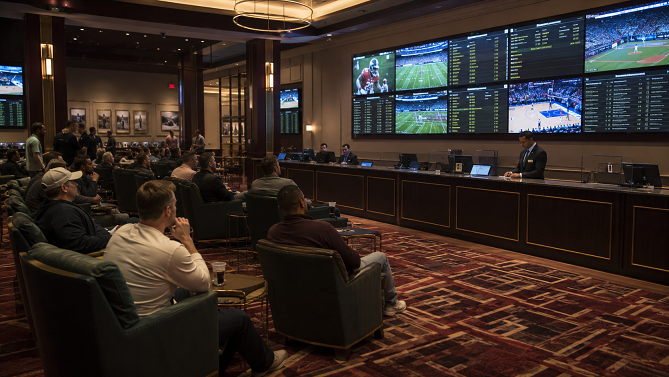
Yet retail sportsbooks compete in a different lane. They are strongest when the sports event itself becomes a social occasion. Big screens, reserved seating, game-day menus, casino rewards, hotel stays, and same-property entertainment can make the sportsbook part of a larger trip. That does not make the betting product automatically better, but it gives the operator a way to compete beyond a smaller price difference on a moneyline or total.
Illinois is a useful state for this comparison because it has both physical gaming venues and a mature sports wagering structure. The Illinois Gaming Board says in-person sports wagering went live in the state on March 9, 2020, and its monthly sports wagering reports track regulated activity through public data files. That public reporting gives bettors, operators, analysts, and local governments a clearer view of regulated market activity than offshore or informal gambling environments can usually provide.
That does not mean every retail sportsbook is the right choice for every bettor. The review still starts with rules, pricing, account requirements, payout processes, responsible gambling tools, and event coverage. A physical sportsbook can be impressive as a venue and still require careful comparison as a wagering product.
Why A Casino Resort Can Support Sportsbook Retention
Retail sportsbooks are not isolated rooms anymore. They are built into loyalty systems, food halls, hotels, gaming floors, entertainment calendars, and local tourism plans. Hollywood Casino Aurora reflects that model. PENN’s official opening announcement described a property with more than 1,000 slot machines, over 50 table games, a baccarat room, a retail sportsbook, a 220-room hotel, a full-service spa, a 12,000-square-foot event center, and dining tied to well-known names such as Giada De Laurentiis and Stephanie Izard.
That mix is not only about luxury. It is about retention. A mobile bettor can leave an app in seconds. A resort visitor may stay for dinner, a game, a hotel night, a concert, a meeting, or a group event. The sportsbook becomes one stop inside a wider customer journey.
For betting challengers, this creates a different competitive map. A smaller sportsbook or contest platform may not match a $360 million casino property, but it can still challenge the market through contest design, lower friction, sharper rules, stronger transparency, or more focused bettor education. Betting Challengers has already discussed why online casino legal states require a state-by-state risk checklist, and the same logic applies when comparing retail casinos, mobile apps, and offshore gambling discussions.
That is where a target resource such as offshore casino sites can fit naturally into a broader research process. Offshore casino conversations may help users understand how bettors discuss access, rules, and platform reputation outside the regulated retail environment, but users still need to review local laws, operator terms, dispute options, and responsible gambling resources before treating any platform as suitable.
What The Aurora Opening Says About Regulated Casino Competition
Hollywood Casino Aurora also shows how casino operators are adapting to a crowded Illinois market. The Illinois Gaming Board says Illinois is home to 17 casinos, nearly 9,000 licensed video gaming locations, and 13 active, approved sportsbooks. It also reported that regulated casino gambling, video gaming, and sports wagering generated more than $2.2 billion in tax revenue for the state and local communities during calendar year 2025.
That scale makes the market competitive. A new land-based casino cannot depend only on slot machines and table games. It needs a wider case for visitation. Aurora’s new property leans into accessibility, food, lodging, entertainment, and sportsbook viewing as part of that case.
Retail operators also have to compete with mobile behavior that is already part of daily life. Bettors may check odds while watching a game at home, read market discussion online, compare apps, and enter contests without setting foot inside a casino. That means a retail sportsbook has to give users reasons to visit that go beyond the ability to place a wager.
A physical book may still matter most in a few specific situations:
| Retail Sportsbook Strength | Why It Still Matters | What Bettors Should Review |
|---|---|---|
| Event Atmosphere | Big screens and shared viewing can improve the game-day experience | Seating, crowd size, viewing angles, food options |
| Cash And Service | Some users prefer in-person transactions or staff support | Ticket rules, payout process, hours, account requirements |
| Resort Integration | Casino, hotel, dining, and rewards can extend the trip | Loyalty terms, non-betting costs, responsible play controls |
| Local Regulation | Regulated venues operate under published state oversight | Illinois Gaming Board rules, complaint options, licensing status |
That table does not make retail sportsbooks better than mobile apps. It shows why comparison should be category-specific. A user evaluating a phone app is judging speed, interface, limits, props, pricing, and account tools. A user evaluating a retail sportsbook is judging venue quality, access, support, settlement rules, and how the sportsbook fits into the full property.
Why Responsible Gambling Tools Still Belong In The Retail Conversation
A physical sportsbook can feel more controlled than mobile betting because it requires a trip, a location, and a visible environment. That can be true for some users, but it should not create false comfort. Retail sportsbooks still require responsible gambling safeguards, clear house rules, age restrictions, self-exclusion awareness, and staff training.
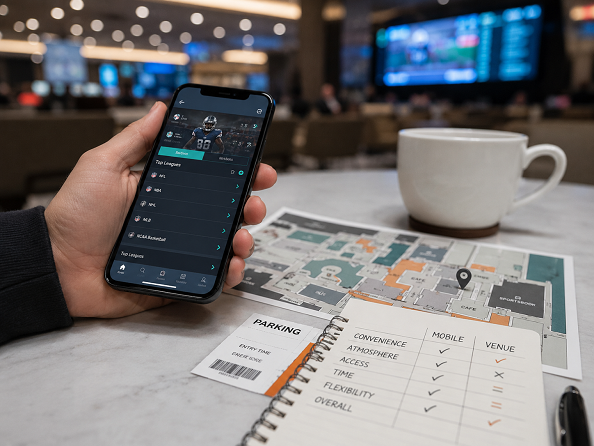
Illinois offers public responsible gambling and self-exclusion information through state-linked resources, and national organizations such as the National Council on Problem Gambling provide responsible gambling resources for users who want tools, support, and education. Those resources matter because the line between entertainment and risky behavior can become harder to manage during high-volume sports periods.
Casino resorts create multiple points of engagement. A visitor may move from a sportsbook to slots, table games, dining, bars, or mobile account activity. The stronger the entertainment ecosystem becomes, the more important it is for users to understand limits before play begins.
For operators, responsible gambling is part of product credibility. It should be visible in retail spaces, mobile account settings, loyalty programs, promotional language, and staff interactions. For bettors, responsible comparison means asking whether the platform gives clear access to limits, self-exclusion, account history, rule disclosures, and support channels.
How Retail Sportsbooks Can Still Challenge Mobile Betting
Hollywood Casino Aurora’s opening shows that retail sportsbooks are not trying to beat mobile apps at being mobile. They are competing by becoming part of a larger entertainment and hospitality model.
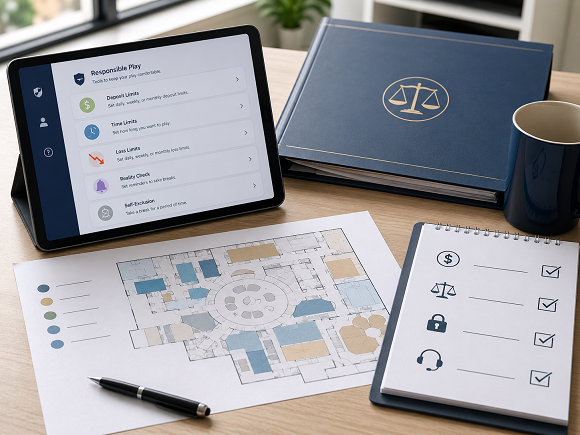
The mobile book is the pocket tool. The retail book is the venue. The casino resort is the ecosystem. Those are three different products, and serious comparison should treat them that way.
For a bettor focused on pricing, a retail sportsbook may not be enough. For a fan planning to watch a full slate of games with friends, a modern sportsbook inside a casino resort may offer a different value proposition. For a contest player, the key issue may be whether the retail environment creates better discipline or more distraction. For a casino player, the concern may be how easily sports betting, table games, slots, rewards, and dining blend into one long session.
That is why Aurora’s new property is useful as a market signal. Retail sportsbooks still have a role, but they need more than betting windows and screens. They need access, comfort, hospitality, transparent rules, responsible gambling tools, and a reason to visit when mobile betting already exists.
Hollywood Casino Aurora’s $360 million opening does not reverse the mobile betting trend. It shows the lane retail sportsbooks can still occupy: event-day experience, regulated local presence, casino-resort integration, and sportsbook comparison that extends beyond the app icon.