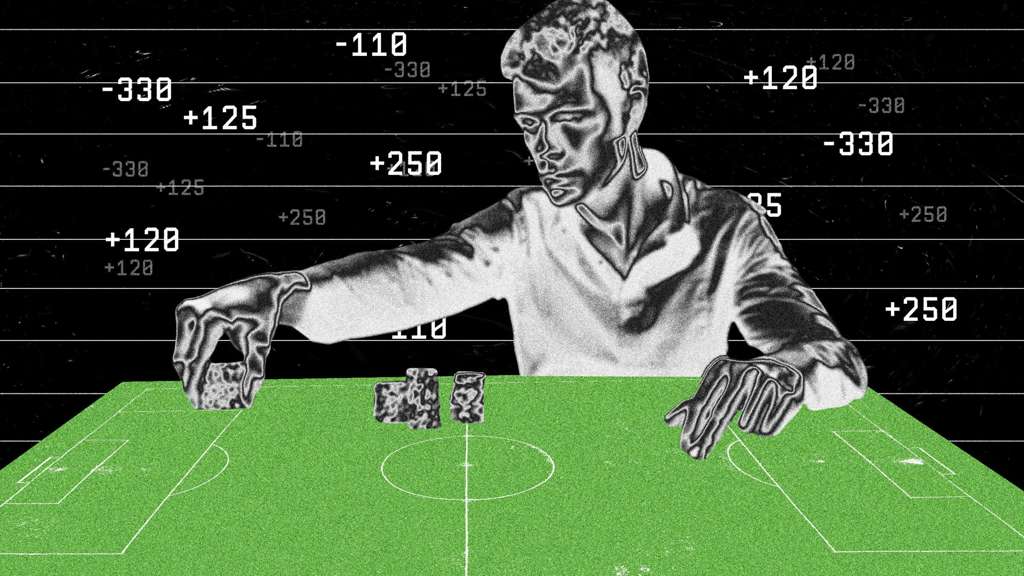
You finally hit a hot streak, crushing player props and sniping lines. Then, suddenly, you go to place a $50 wager on a Tuesday night basketball game, and the app tells you your maximum size is $1.14. You didn’t just get unlucky—you got flagged by a billion-dollar AI algorithm trained to hunt down and neuter profitable players. In fact, you sit there staring at your phone screen wondering what you did wrong after spending three hours capping the board and finding an incredible edge. Soon, you realize the greedy bookmakers already labeled you a threat and quietly choked your action down to pennies just to protect their fat bottom line.
Next, if you think live wagering is your sneaky way around the system, you’re walking straight into their most profitable trap. So, stop giving your dough to Wall Street tech companies masquerading as local bookies. Keep reading to learn exactly how sportsbooks limit players, avoid those in-game traps, and start playing a structure you can actually beat.
Next, if you want a disciplined approach to building your bankroll without immediately tripping these corporate alarms, checking out our guide on the rolling accumulator strategy is a smart next step.
The Invisible Bookie: How AI Profiles Your Account
No human sits in a dusty backroom manually reviewing slips anymore. Today’s operation relies entirely on cold, ruthless machine learning. If you want to understand the mechanics behind these restrictions, check out this breakdown on exactly how bookies identify and limit winning players.
We need betting limits explained clearly right now: the books categorize you the millisecond you create a profile.
These systems track everything. They monitor the exact time you submit a slip, your wager sizing consistency, withdrawal frequency, and even how fast your thumb taps the glass. They want sloppy gamblers who chase losses. When you show discipline, the AI in sports betting flags you.
Here is exactly what they watch:
- Betting against the public: You grab ugly underdogs consistently.
- Line shopping: You deposit funds only when they offer the absolute best price.
- Fractional sizing: You wager $112.50 instead of a round $100, signaling you use strict bankroll models.
To understand exactly how the algorithm sorts your account, look at this breakdown of how the machine categorizes user behavior:
| Betting Behavior | The Recreational “Square” (Safe) | The “Sharp” Player (Targeted for Limits) |
| Wager Sizing | Round numbers ($25, $50, $100) | Fractional sizes based on math ($42.50, $112) |
| Market Choice | Prime-time NFL, NBA, massive parlays | Obscure tennis, props, niche table tennis |
| Bet Timing | 10 minutes before tip-off / kick-off | Instantly when opening lines drop |
| Closing Line Value | Negative (Beats the line rarely) | Consistently Positive (Beats the line frequently) |
| Post-Win Action | Increases bet size, places immediate wagers | Withdraws funds, maintains strict unit sizing |
You think you are just flying under the radar placing twenty-dollar wagers on obscure tennis matches in the middle of the night but the sportsbook tracking software explained earlier logs every single keystroke and cross-references your activity against thousands of known professional gamblers to build a terrifyingly accurate profile of your skill level before you even win your first bet. Once categorized as a “sharp,” your sportsbook account restricted status activates instantly. You go from a valued customer to a financial liability.
The machine learning models used in risk management dictate that any user showing a mathematical pulse gets gutted. They don’t care about fair play. They care about extracting maximum revenue from losing players.
Look at a common mistake amateurs make. A guy wins a massive parlay, cashes out $5,000, and immediately starts placing $500 straight bets on niche table tennis markets. The algorithm catches that instant deviation in behavior. It restricts his limits to zero within ten minutes. Never change your unit size dramatically after a win.
CLV: The Three Letters That Get You Banned
Why did my sportsbook limit me? I hear this question daily from guys who are actually down money overall. The answer always boils down to Closing Line Value CLV.
Understand this concept: CLV measures the odds you got compared to the odds offered right before the event starts. Say you grab the Chiefs at +3 on Monday. By Sunday morning, heavy money moves the line, and Kansas City closes at -1. You gained four points of pure value.
Sportsbooks hate this. They track your CLV relentlessly. If you consistently beat the closing line, you possess a tangible, undeniable edge.
The mathematical concept of Closing Line Value proves that long-term profitability hinges entirely on beating the market before it shifts. The algorithm sports betting engines know this fact. You might suffer a nasty cold streak and lose ten straight wagers, but if your CLV remains positive, the house will ban you anyway. They refuse to sweat the variance. They boot you because you pose a statistical threat to their margins.
Look at it like buying a stock right before earnings beat expectations. Do that enough times, and the casino stops letting you trade. They want players who bet the Lakers at -5 right before tip-off when the line opened at -2. Those players bleed cash long-term. Beating the closing line is the single highest predictor of future success. You master CLV, and the book puts a target on your back.
You spend weeks building a massive spreadsheet tracking injury reports and weather patterns just to grab a half-point advantage on a college football total on a Tuesday afternoon only to find out the risk department flagged your account on Thursday because your closing line value hit five percent and they consider you toxic.

The Live Betting Trap: Why You Can’t Out-Compute the Machine
Let’s pivot to the biggest illusion in the industry. Your live betting strategy is completely flawed. In-game wagering holds the highest juice in the entire market.
You watch a point guard roll his ankle and immediately sprint to your device to smash the under on his scoring total thinking you just gained a massive advantage against the house, but the supercomputers have already scraped the injury data, recalculated millions of possible game trajectories, and adjusted the odds down forty percent before your thumb even hits the screen.
You cannot out-compute the machine. The algorithms generate in-game odds using millions of historical data points per second. Your human brain relies on emotion, momentum, and visual bias.
Stop trying to beat them at their own game. Why live betting is a bad idea comes down to sheer computing power. The books inflate the vig heavily during live events to protect themselves from volatility. You end up paying a premium price for degraded odds.
- Pre-game margins: Typically around 4-5%.
- Live betting margins: Often skyrocket to 8-10%.
You pay double the tax for the privilege of gambling on impulse. Stop burning your loot on these rigged setups. The house wants you addicted to the dopamine rush of instant results.
Imagine sitting at a blackjack table where the dealer gets to see the next card before you decide to hit or stay. That is exactly what you face when engaging in live markets. You assume you spot a shift in momentum because the home crowd gets loud, so you hammer the moneyline, completely unaware the algorithm factored in home-court variance before the season even started. You bleed your stack dry chasing ghosts.
The Latency Illusion: You Are Betting on the Past
We need to talk about the live betting delay. When you sit on your couch watching a prime-time football broadcast, you feel completely locked into the action. You aren’t.
The feed on your television runs on a significant delay. The average latency in live broadcast feeds hovers between seven and fifteen seconds. Sometimes it stretches to a full thirty seconds on streaming platforms. This video perfectly illustrates the massive advantage bookies have by utilizing courtside data scouts over broadcast feeds.
The books do not use cable TV. They pay exorbitant fees for courtside data scouts who push buttons the millisecond a referee blows his whistle. Their data feed is instantaneous.
This creates a devastating asymmetry. You see a receiver break free and rush to bet the next play will be a touchdown. The bookmaker already knows the quarterback got sacked. They gladly take your money, fully aware the play failed seconds ago. You bet on the past. The house bets on the present. You lose before the ticket prints.
You sit there screaming at your television screen begging your team to convert a fourth down while holding a ticket you just bought for fifty bucks totally oblivious to the reality that the algorithm already cashed your money and moved on to the next quarter because they received the official play result a full ten seconds before your satellite dish even caught the signal.
Never fall for the latency trap. The app builds in an artificial spinning wheel that delays your submission for five seconds. They do this to ensure no sudden game-changing events happen while your wager processes. If a turnover occurs during that spin, they reject the bet. If your team fumbles, they accept it instantly. It is a one-way street paved with your cash.
How to Fight Back: Stop Playing Their Game
You cannot outsmart an AI that kicks you out the second it starts losing. If you play by their rules, you face an impossible wall. Win too much? Restricted. Lose too much on live lines? Bankrupt.
So, what’s the bottom line? Stop fighting the house. Start fighting other players.
Take your skills to a flat, unmanipulated environment. Community leaderboards completely strip away the corporate algorithms. When you participate in structured formats, nobody limits your account for finding an edge. The books want you isolated, playing a rigged slot machine masked as a sports market.
Break the cycle. Pivot your energy toward beating regular guys who make the same emotional mistakes you used to make. The math finally works in your favor when the playing field levels out. You keep your stack safe and test your actual sports knowledge, not your ability to dodge a machine learning ban-hammer.
Think about poker. You play against the table, and the casino takes a tiny rake. Sports betting challenges operate on that exact same principle. You rely on your brain to out-pick the public. If you string together five brilliant picks in a row, a community leaderboard celebrates you. A traditional sportsbook sends you an email stating your privileges have been revoked.
You spend years honing your craft and learning how to read line movement just to get slapped with a restriction notice the minute your hard work pays off, forcing you to resort to offshore accounts and proxy bettors just to get a decent wager down on a Sunday slate. Eliminate that headache entirely. Put your ego on the line against real human beings.
Conclusion & Next Steps
The modern sportsbook isn’t your friendly neighborhood bookie; it is a massive tech company harvesting your data to squeeze every penny out of your pocket. You absolutely cannot out-compute their AI on live lines, and if you manage to consistently beat their pre-game lines, they just ban you. The only way to restore the fun, fairness, and profitability to sports gambling is by competing against other humans in structured formats, not against rigged corporate algorithms.
Ready to stop getting punished for being smart? Join sports betting tournaments today. Sign up for betting challenges at bettingchallengers.advision-dev.com/. Track betting ROI online, compete in betting leaderboards, and prove your edge against real people. Stop letting the algorithms dictate your ceiling.
Frequently Asked Questions
How do sportsbooks know you are a sharp bettor? They use automated software to track your CLV, wager sizing, and line shopping habits. If you consistently wager fractional amounts on obscure markets at the absolute best market price, the system immediately tags you as sharp.
What happens when a sportsbook limits your account? You will log in and find your maximum allowed wager drastically reduced, often to under five dollars. They do not freeze your funds, but they make it mathematically impossible to generate any meaningful profit on their platform.
Why live betting is a bad idea? It combines extreme vig with severe latency disadvantages. You pay double the standard margin to wager on a broadcast feed that is roughly ten to fifteen seconds behind the bookmaker’s real-time data scouts.
Sportsbook tracking software explained: Can I hide my IP? Using a VPN might hide your location, but it does not hide your betting patterns. The AI restricts you based on your mathematical behavior, not just your physical address. If your CLV is high, the algorithm catches you regardless of where your internet connection originates.